Why Appliances in Huntington Beach Vacation Rentals Die Twice as Fast
I service a cluster of properties between Main Street and the pier that I’ve started calling my “Saturday route,” because that’s when the turnovers happen. New guests in, old guests out, and somewhere in the six-hour gap a cleaning crew runs every washer, dryer, and dishwasher in the unit back to back to back. I get more service calls from that eight-block stretch of downtown than from entire residential tracts ten times the size. The appliances aren’t cheaper or worse-installed than anywhere else. They’re just living a different life.
If you own or manage a short-term rental near the sand — and Huntington Beach has one of the densest concentrations of them in Orange County, thanks to Huntington State Beach, the pier, and the walkable downtown grid — your appliances are absorbing three things a normal household never sees at this volume: sand, chlorine and sunscreen residue, and turnover-driven overuse. Here’s what that actually does to the machines, and what it costs to stay ahead of it.
Sand is not lint. Your washer disagrees.
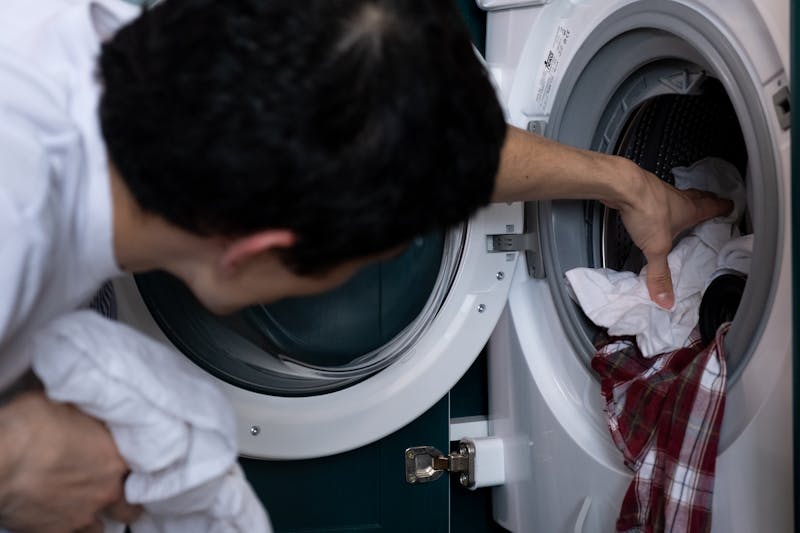
Every guest who spends a morning at the beach comes home with sand in their swimsuit, towel, and beach bag, and every one of those items goes straight into your washer. A residential washer’s drain pump and drain hose are designed to pass lint and soap film — not silica grit. Sand settles to the bottom of the tub, works its way past the tub seal into the bearing housing, and acts exactly like valve-grinding compound. I’ve pulled tub bearings out of two-year-old rental washers that looked like they’d run for a decade, sanded smooth and packed with a fine gray paste that used to be a lubricant.
The drain pump takes the second hit. Sand chews through the plastic impeller vanes, and a pump that should last the life of the machine instead grinds itself down and starts throwing drain error codes — SUDS or drain-fault codes on most brands — six to twelve months into rental service. I replace more drain pumps on beach-adjacent rental washers than on any other category of call I run.
What helps: a mesh laundry bag policy for beach towels (cleaning crews shake sand out before washing, not after), and a lint-and-sand trap installed inline on the drain hose — a $15 part that saves a $220 pump replacement. I install these on every rental unit I service now, and the difference in twelve-month callback rate is obvious from my own service logs.
The dishwasher and disposal problem nobody budgets for
Turnover cleaning crews run the dishwasher on every changeover whether it’s a full load or four coffee mugs, because it’s faster than hand-washing on a tight schedule. That’s fine for the dishwasher itself — it’s built for daily cycling. The garbage disposal is where the real damage happens.
Guests treat a vacation kitchen disposal like it’s invincible: shrimp shells, avocado pits, corn cobs, the little produce stickers, whatever didn’t get eaten before checkout. A disposal in a normal household grinds maybe a load or two a week. A disposal in a rental that turns over every three to five days grinds a full “party cleanup” load every single time, and it does it without anyone around who knows the unit’s quirks — no one’s there to run cold water the whole time, or to know that this particular disposal jams on avocado skin. I get more disposal jam and motor-burnout calls from rental kitchens than from full-time residences of the same age, even though the rental units are usually newer.
What helps: a laminated card taped inside the cabinet door telling guests what not to put down the disposal, and a mid-grade disposal (3/4 horsepower minimum) instead of the builder-grade 1/3 horsepower unit that came with the property. The upgrade runs about $280 installed and pays for itself the first time it doesn’t jam during a Saturday turnover when no technician is available until Monday.
Salt air and sunscreen film on top of everything else
If your rental sits within that one-mile band of the coast — which covers essentially all of downtown HB and the PCH corridor — you’re stacking rental-volume wear on top of the corrosion problem I’ve written about before on this blog. Sunscreen and salt residue on hands means every appliance touchpoint — dishwasher door latch, washer control panel, disposal switch — gets a slow film buildup that regular household cleaning schedules don’t budget for. It’s cosmetic at first, then it’s sticky buttons and unresponsive touch panels within eighteen months instead of five years.
The math that actually matters for owners
A residential washer or dishwasher is rated by manufacturers for a certain number of cycles per year, and mainstream models assume something like 300–400. A well-booked HB rental with a cleaning crew doing sand-heavy beach-towel loads can blow past 800–1,000 cycles a year. That’s not a defect claim — it’s outside the design envelope, and it’s why rental-property appliances that look four years old are mechanically eight.
I tell every property manager on my route the same thing: budget for a service visit at month six of a new appliance’s life, not year two. A $95 preventive check — sand trap inspection, disposal check, gasket wipe-down — catches the pump-killing grit and the jammed impeller before a guest finds out about it at 9pm on a Friday with a five-star review on the line.
Managing a rental near the beach and tired of surprise breakdowns between guests? Call (714) 243-8415. We work around checkout windows, and for property managers with multiple units we can set up a standing preventive schedule so the first you hear about a problem isn’t from a guest.